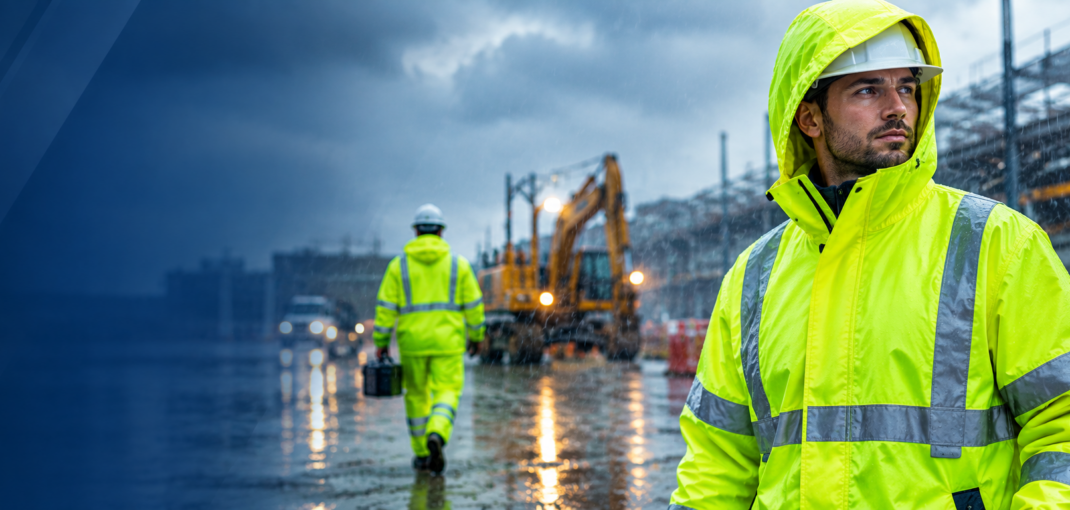
NOAA says El Niño is strengthening, with a greater than 90% chance of a very strong event during fall and winter 2026-27. That doesn’t mean every jobsite will see extreme storms, but it does give safety and operations teams with outdoor crews a good reason to get their wet-weather plans in order now.
Rainwear is part of that preparation, but there’s more to consider than keeping workers dry. Crews need to know when conditions should stop the work, and any rainwear they put on still has to maintain the visibility, fit, movement, and access to other equipment the job requires.
This article looks at how safety teams can prepare outdoor crews and emergency response teams for wetter conditions, from deciding when work should stop to checking how high-visibility rainwear fits, functions, and works with the rest of their gear.
Key Takeaways
- Outdoor crews and emergency response teams need clear wet-weather plans, including who monitors conditions, who can stop the work, and where crews will shelter if conditions become unsafe.
- High-visibility rainwear should be evaluated as part of the worker’s complete setup, including required visibility, fit, movement, hood use, and access to radios, fall protection, and other equipment.
- Before wetter weather arrives, employers should check rainwear quantities and sizes, inspect existing gear for deterioration, test it with normal work clothing and equipment, and stage it where crews can access it.
Before You Choose Rainwear, Decide When the Work Stops
Rainwear only matters when conditions are safe enough for the work to continue. Some weather calls for a change in PPE. Other conditions call for getting the crew out of the exposure.
The National Weather Service’s lightning guidance for outdoor workers says there is no safe place outside during a thunderstorm. If workers can hear thunder, they should stop work and seek shelter in a substantial building or hard-topped metal vehicle.
Crews should know ahead of time who is watching the weather, who has authority to stop the job, and where workers will go if conditions become unsafe. When the work can continue in the rain, the next question is whether the crew’s rainwear is right for the job.
How to Evaluate Rainwear as Part of the Worker’s Full Setup
A road maintenance worker may start the shift in the right hi-vis vest, then add a waterproof shell when the rain starts. That extra layer can affect the worker’s visibility, range of motion, fit, and access to other equipment.
For that reason, rainwear should be evaluated with the clothing and equipment workers will actually use on the job. These steps can help confirm the full setup works as intended before crews need it.
1. Check the Required Visibility
Start by confirming that the worker’s wet-weather outer layer provides the visibility required for the job. For example, for workers in temporary traffic-control zones, the MUTCD requires Performance Class 2 or Class 3 high-visibility safety apparel.
The visibility of the complete setup matters, not just the classification of the vest or garment they started the shift wearing.
2. Check the Fit With Normal Work Layers
Rainwear also needs to fit over the clothing and equipment workers will actually wear. A jacket that fits well over a T-shirt may become restrictive over a hoodie, insulated layer, or fall-protection harness.
That fit matters from a compliance standpoint too. OSHA’s PPE requirements require applicable PPE to properly fit affected employees. Have workers reach overhead, bend, kneel, climb, and turn in the same setup they would use on the job.
3. Test It With the Rest of the Worker’s Equipment
Once the fit is right, check how the rainwear works with the rest of the equipment the worker uses. Have workers put on their normal boots, hard hat, gloves, radio, harness, and other gear, then add the rainwear and move through representative tasks.
Then, ask questions like:
- Can the worker turn their head easily with the hood up?
- Does the hood work with the hard hat?
- Can they reach the radio microphone?
- If they wear fall protection, can they still access the necessary harness connection points with the jacket closed?
Workers use all of this equipment together in the field, so the rainwear should be evaluated the same way.
4. Make Sure Workers Can Keep It On
The final check is whether the rainwear remains workable through the task. If heat, moisture, or restricted movement leads workers to unzip or remove the garment, the setup being used in the field is no longer the one that was evaluated.
Ventilation, mobility, hood design, cuffs, closures, and access features can all affect whether workers can keep the rainwear on and still do the job effectively.
Get Wet-Weather Gear Ready Before the First Storm
The first heavy rain of the season is a bad time to discover that gear is damaged, missing, or available only in the wrong sizes. That preparation can be especially important for emergency response and recovery crews that may be called out for rescue, utility restoration, or cleanup after flooding. Before wetter conditions arrive, review four areas:
- Inventory: Confirm which crews and locations need jackets, pants, bibs, or other wet-weather gear, then check quantities and sizes.
- Condition: Look for fading, soiling, damaged reflective material, tears, failed closures, and other deterioration.
- Fit and compatibility: Have representative workers test the complete setup with their normal clothing and equipment.
- Availability: Stage usable gear and replacements where crews can access them when conditions change.
The goal is to know what each crew has, what is still usable, and what needs to be replaced before wet weather puts that gear to the test.
Match High-Visibility Rainwear to the Work
Once safety teams understand how crews will work in wet conditions, they can choose rainwear that fits the job. A road crew working around traffic may need different features than a construction crew wearing fall protection or an emergency response team assisting with flood recovery.
Kishigo offers high-visibility rainwear designed around those different demands. The Storm Stopper Pro Rainwear Jacket, for example, combines waterproof seam-sealed construction with a vented cape back, adjustable cuffs, a hidden hood, a radio pocket, D-ring access, and ORALITE prismatic reflective tape.
Get your crews ready before the next stretch of wet weather. Review what each team needs, then explore Kishigo’s high-visibility rainwear to find jackets, pants, and bibs that match the work.
Frequently Asked Questions About High-Visibility Rainwear
Does OSHA Require Employers to Pay for Rain Gear?
Ans- Not always. Under OSHA’s construction PPE rule, ordinary clothing used solely for weather protection, including raincoats, is excluded from the general employer-payment requirement. Required PPE used to comply with applicable OSHA requirements is generally employer-paid, subject to the rule’s listed exceptions.
Is Class 3 Rainwear Always Required When Working Near Traffic?
Ans- No. The appropriate garment depends on the applicable requirements and work environment. The MUTCD requires Performance Class 2 or 3 apparel for covered workers in temporary traffic-control zones and places selection of the appropriate class with the employer’s designated safety person.
How Often Should High-Visibility Rainwear Be Replaced?
Ans- There is no single replacement interval for every garment or work environment. Inspect rainwear for fading, soiling, damaged reflective material, tears, failed closures, and other deterioration, and follow the manufacturer’s care and replacement guidance.
Does Rainwear Need to Fit Differently Over Winter Work Clothes?
Ans- It may. A garment that fits over light clothing can become restrictive once workers add insulating layers or other equipment. Test rainwear over what workers will actually wear and check movement, closures, hood function, and equipment access before it goes into service.